Alexander Mandagie Paris
Pink and Purple Lasem Batik with French Silk Velvet
Pink and Purple Lasem Batik with French Silk Velvet
Couldn't load pickup availability
This cushion will transport you to the exotic small town of Lasem in Central Java, Indonesia, famous for its artisanal tradition. Featuring authentic hand-drawn batik fabric in stunning pink and purple colours on the front. Crafted using traditional wax-resist techniques that take hours to complete, the intricate patterns celebrate Lasem’s rich heritage and its centuries-old reputation for bold, expressive batik designs.Producing this batik required 100 hours of the artisan’s work over a two-month period.
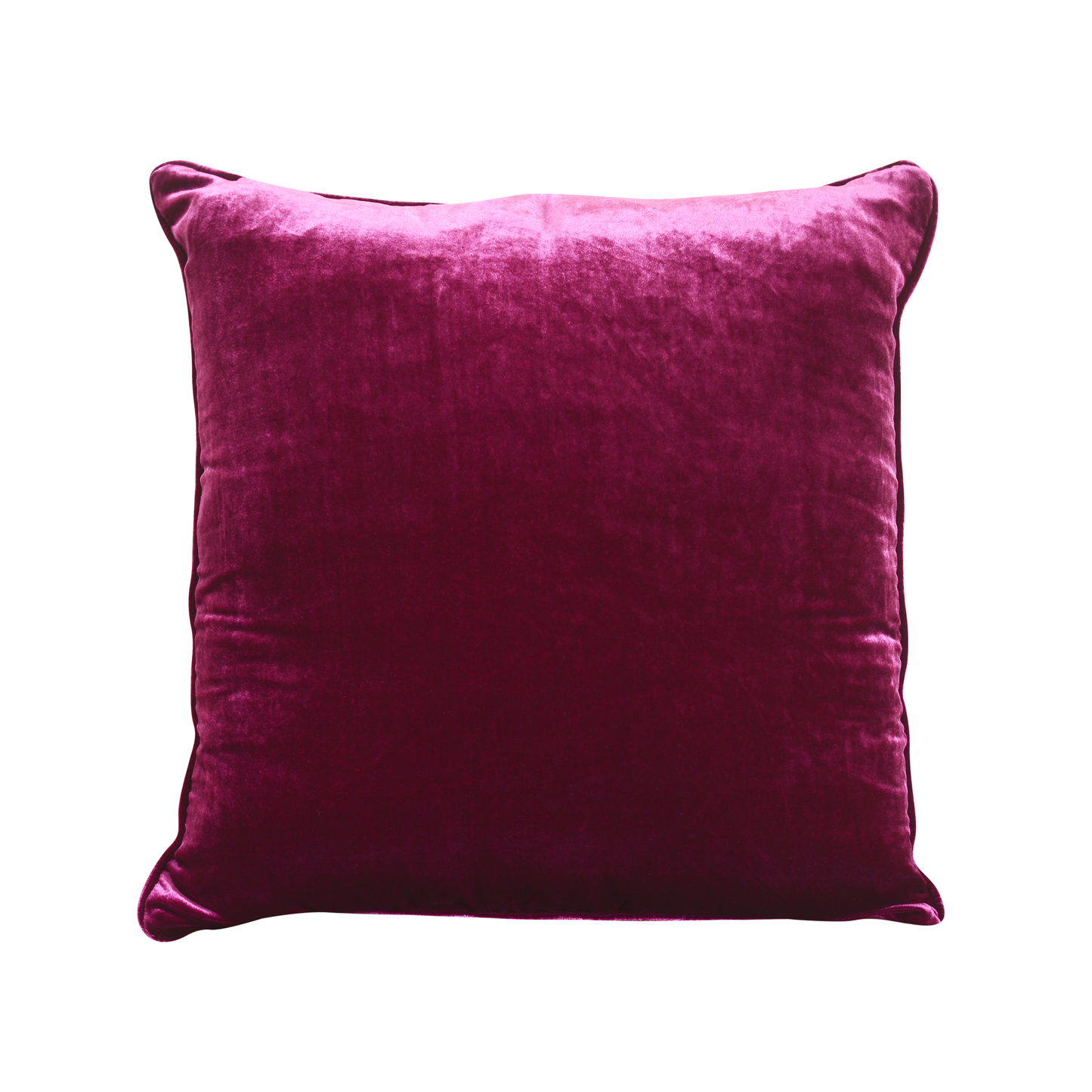
The back is finished with luxurious French silk velvet, offering a sumptuous contrast of texture and sheen. This cushion is a sophisticated fusion of Indonesian craftsmanship and European elegance, perfect for adding a striking accent to any interior.
Each cushion is made to order, allowing time for careful craftsmanship and attention to detail. Your piece will be ready for shipping within 15 working days of your order date. As they say, beautiful things take time.
It is a perfect, unique gift for you or the ones you cherish most. We invite you to place your order now.
Dimensions: 50 cm x 50 cm. Materials used for the front of the cushion: Hand-drawn cotton made by artisans. Materials used for the back of the cushion: French silk velvet. All of our cushions are assembled in Paris, France. Specialised dry clean only. Kindly note the insert is not included. SKU: BLV001
---
In the coastal town of Lasem (Rembang, Central Java), the key folklore event is the arrival of a Chinese‑Javanese couple who become the mythical founders of local batik. According to Babad Lasem and later oral histories, in the 15th century a ship captain from Admiral Cheng Ho’s fleet, named Bi Nang Un, asked permission from the local ruler, Prince Wijaya Badra, to settle in Lasem. He then returned to China to fetch his wife, Na Li Ni (sometimes described as a princess from Champa), and brought her to live in the village of Binangun.
In Lasem, Na Li Ni begins teaching local women how to make batik, introducing motifs and colours from her own heritage: dragons (naga), phoenixes (hong), koi fish, chrysanthemums, peonies, and the vivid “Chinese red” background. These designs merge with existing Javanese patterns such as kawung, sekar jagad, and udan liris, creating a distinctive “Chinese‑van‑Java” style that becomes the hallmark of Lasem batik. The story is told as a cultural romance: through Na Li Ni’s skill and generosity, two civilizations—Chinese and Javanese—are woven together in cloth, and the town itself becomes known as “Little China” on Java’s north coast.
---
France’s textile heritage is defined by a cluster of high-skill crafts rather than a single national style, with Lyon’s silk industry, Aubusson and Gobelins tapestries, and refined embroidery and lace traditions forming the core. Royal policy under Louis XIV and Colbert encouraged luxury manufacture, and Lyon’s silk workshops became central to European fashion and interior furnishing, developing increasingly complex figured weaves and, later, the Jacquard loom. These developments are documented in scholarly surveys such as 5000 Years of Textiles (1993) and in historical studies of French luxury manufacture that highlight Lyon, Aubusson, and Gobelins as emblematic sites of courtly and industrial textile excellence.
In luxury interiors, French fabrics carry prestige because they combine technical refinement with a strong sense of composition: controlled pattern, subtle sheen, and a disciplined approach to colour and scale that suits both classical and contemporary rooms. A cushion made from French textile is therefore not merely decorative; it is a small, tactile expression of a culture that has long treated cloth as a medium of art, architecture, and social ritual, embedding history and skill into everyday use.
Share