Alexander Mandagie Paris
Tosca Lasem Batik and Italian Silk Velvet
Tosca Lasem Batik and Italian Silk Velvet
Couldn't load pickup availability
This dazzling cushion features authentic Peranakan batik from Lasem, a northern coastal town in Central Java, Indonesia, that reflects the region’s rich heritage and intricate motifs. The artisan spent a total of 100 hours making this batik over two months.
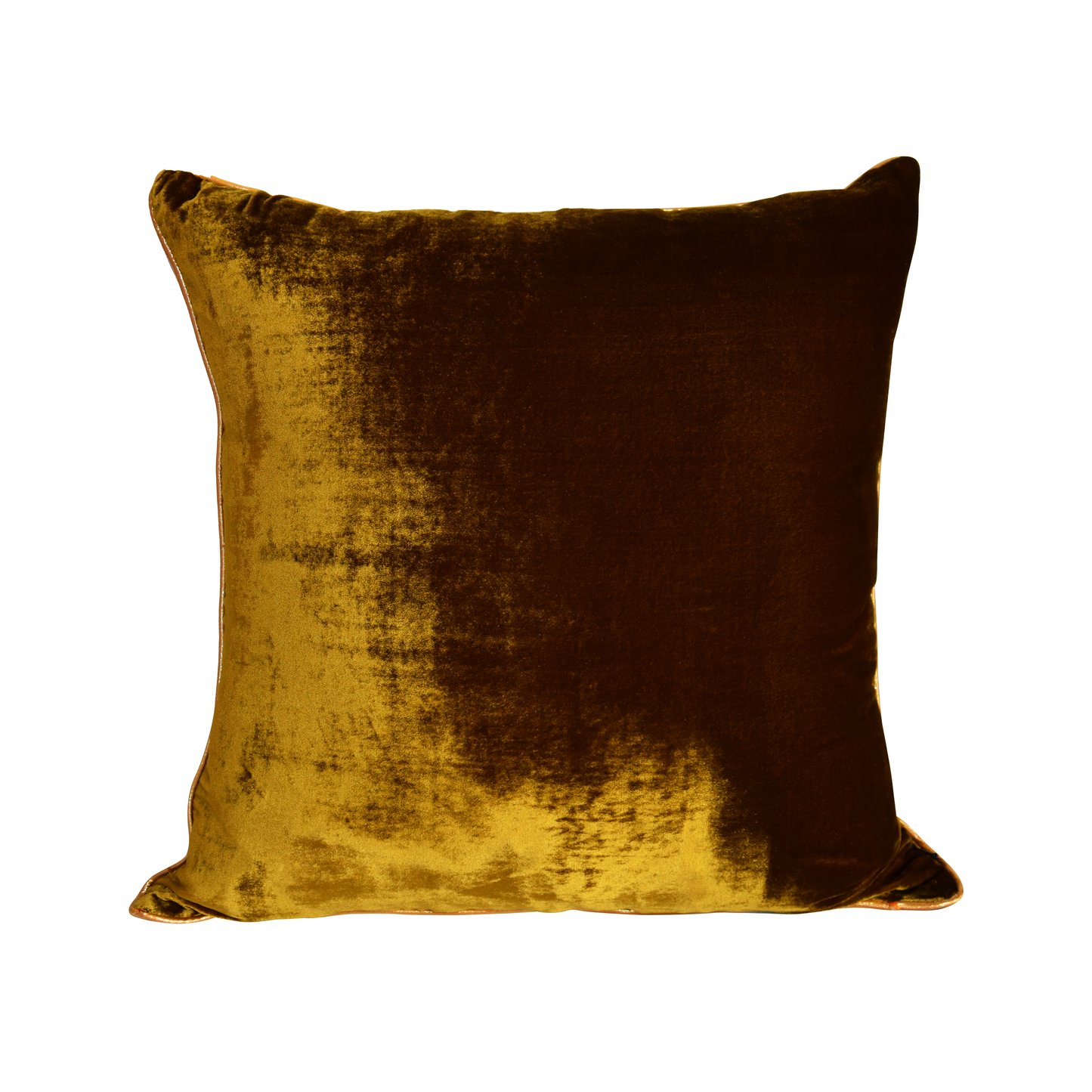
The back is crafted from luxurious Italian velour, renowned for its softness, elegant sheen, and enduring quality, adding a touch of European refinement to the piece. This unique cushion beautifully unites Indonesian craftsmanship and culture with the timeless sophistication of Italian textiles, making it a striking accent for any interior.
Each cushion is made to order, allowing time for careful craftsmanship and attention to detail. Your piece will be ready for shipping within 15 working days of your order date.
It is a memorable present for your loved ones or even for yourself. We invite you to place your order now.
----
Dimensions: 50 cm x 50 cm. Materials used for the front of the cushion: Batik fabric made from 100 % cotton. Materials used for the cushion back: Italian silk velour. All of our cushions are assembled in Paris, France. Specialised dry clean only. Kindly note the insert is not included. SKU : LLV002
-----
Lasem, a coastal town in Rembang Regency on Central Java’s north coast, is celebrated for a batik tradition that crystallized between the 15th and 19th centuries through sustained contact between Javanese artisans and Chinese merchants and settlers.
The craft is defined by hand-drawn wax-resist (batik tulis) techniques in which molten wax is applied with a canting tool to create intricate patterns before dyeing, a method that allows for fine lines and layered colouration. Lasem’s distinctiveness lies in its visual hybridity: motifs draw on Chinese iconography such as dragons, phoenixes, and cloud forms, while integrating Javanese floral and geometric patterns and the region’s characteristic “blood-red” (getih pitik) alongside soga brown and indigo blues. This fusion reflects Lasem’s historical role as a trading port where Chinese and Javanese communities coexisted and intermarried, producing a textile language that is both locally rooted and cosmopolitan.
In luxury interiors, Lasem batik carries prestige precisely because it embodies a documented history of cultural dialogue and artisanal skill rather than mass production.
Each cushion upholstered in authentic Lasem fabric is a small archive of Javanese-Chinese acculturation, its motifs and colour palette speaking to centuries of shared craft knowledge and symbolic meaning. For design-conscious owners, this heritage transforms the cushion from a decorative commodity into a meaningful object that signals appreciation for handcrafted textiles, cross-cultural narratives, and the enduring value of slow, meticulous making
---
Italian Tradition
Italy’s textile heritage is not one single school but a network of regional crafts, especially silk in Lucca, Venice, Florence, Bologna, Genoa, Milan, Naples, and later Piedmont, alongside wool and linen traditions in other centres. Scholarly surveys trace the rise of Italian silk from the medieval period into the early modern era, when guild regulation, specialised dyeing, complex weaving, and finely figured cloth made Italian production central to European luxury. These traditions are documented in La seta in Italia dal Medioevo al Seicento: Dal baco al drappo (2000) and in 5000 Years of Textiles (1993), which places Italian silks within the broader history of European textile innovation.
In interior design, Italian textiles carry prestige because they embody technical discipline rather than ornament alone: controlled sheen, precise weave structure, and a long association with civic wealth, patronage, and ceremonial use. A cushion made from Italian fabric is therefore not just decorative; it is a compact expression of a culture that has long treated cloth as architecture for the body and the room, giving a living surface to memory, skill, and proportion.
Share