Alexander Mandagie Paris
Blue Baduy Woven Fabrics with French Jacquard
Blue Baduy Woven Fabrics with French Jacquard
Couldn't load pickup availability
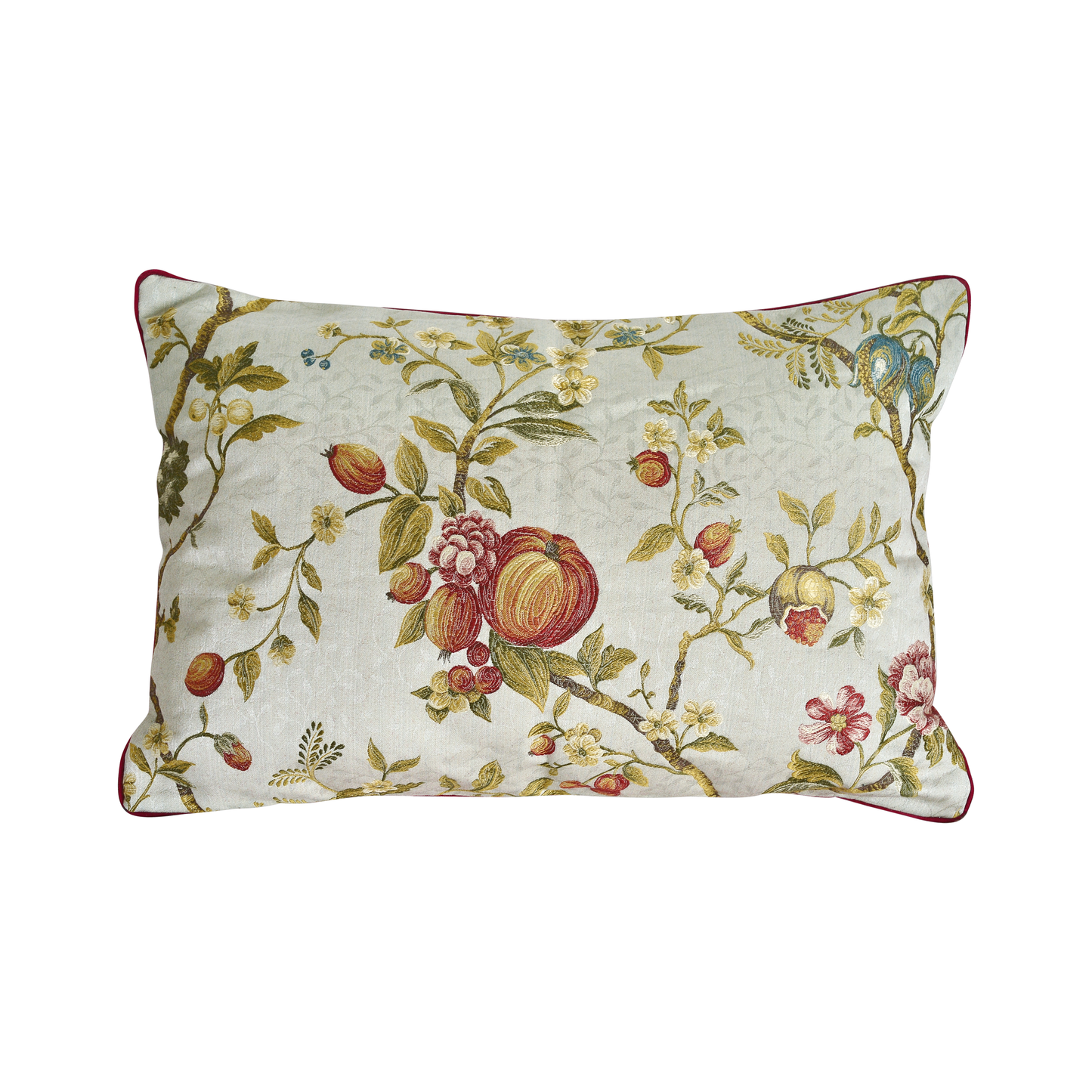
The front is made from hand-woven cotton fabric, traditionally produced by Baduy artisans in Indonesia, using natural dyes from the area's trees and leaves. The back of the piece features a classic French Jacquard, renowned for its timeless elegance and exceptional craftsmanship. This unique combination celebrates both European textile heritage and the traditional artistry of the Baduy people, resulting in a harmonious blend of luxury and cultural authenticity. It took the artisan over 200 man-hours to handweave this fabric.
Dimensions: 45 cm x 45 cm. Materials used for the front of the cushion: Handwoven cotton with natural dyes. Each unit of fabric is a fruit of over 100 man-hours of handmade weaving. Material used for the back of the cushion: French Jacquard, made in France. All of our cushions are assembled in Paris, France. Specialised dry clean only. Kindly note the insert is not included. SKU: BPFJ002
-----
The Baduy People
Living in voluntary isolation within the rugged Kendeng Mountains of Banten, West Java, the Baduy people maintain a spiritual lifestyle centred on preserving cosmic order and ancient Sundanese ancestral laws. Their cultural purity is articulated through Tenun Baduy, a handwoven textile tradition strictly categorised by social division. The Baduy Dalam (Inner Baduy) weave austere white and dark blue fabrics that represent spiritual cleanliness, while the Baduy Luar (Outer Baduy) produce textiles featuring geometric stripes and intricate supplementary-weft patterns such as the Aros and Suat Samata. Woven exclusively on traditional back-strap looms (gedogan), these textiles are made from hand-spun cotton and dyed with natural botanical dyes such as indigo and morinda root.
The act of weaving in Baduy society is a sacred, meditative practice reserved for women, embedded with prayers and strict taboos that prohibit the use of modern tools or chemical additives. Each geometric motif serves as a physical manifestation of their cosmological worldview, which emphasises balance, restraint, and an absolute non-interference with the natural landscape. These fabrics are integral to tribal governance, life-cycle ceremonies, and diplomatic presentations to external authorities. The raw texture, deep natural indigo, and structural integrity of Baduy weaving bring a quiet luxury and minimalist authenticity to modern textile design, transforming a simple cushion into a powerful narrative of eco-spiritual dedication.
In Baduy oral literature, the story of Purnama and the Weaver's Loom is a classic narrative that illustrates the sacred nature of marital commitment and familial continuity.
The story concerns a young hunter named Purnama who, while wandering through the protected forests, caught the resonant sound of a back-strap loom echoing from a secluded valley. Following the rhythmic sound, he discovered a young woman weaving a cloth of pristine white and deep indigo. The focus, grace, and spiritual serenity she displayed while handling the threads captivated Purnama, who recognised her disciplined art as a reflection of an ideal partner committed to ancestral laws.
Their courtship was defined by shared devotion to the community’s strict codes of modesty, and their eventual marriage was anchored by the presentation of a specially woven cloth that symbolised their unyielding bond. Within the Baduy tradition, this story is shared to emphasise that true love is not born of fleeting passion but of mutual dedication to spiritual duty and the preservation of the home. The loom itself becomes a metaphor for family life, where the warp and the weft represent the husband and wife, distinct in their directions yet permanently locked together to create a durable, harmonious fabric that withstands the passage of time.
---
History of French Jacquard
The term “Jacquard” refers both to a specific weaving mechanism invented in France in 1801 and to the category of fabrics produced using that mechanism. The invention is credited to Joseph-Marie Jacquard (1752–1834), a Lyonnais inventor and former silk worker who, building on earlier experiments by Basile Bouchon (needles, 1725), Jean-Baptiste Falcon (continuous chain of perforated cards, 1728), and Jacques de Vaucanson (cylindrical control system, mid‑18th century), combined these elements into a single, practical attachment for the loom. In 1801, at the French Exhibition of Industrial Products, Jacquard presented the first version of his loom and received a bronze medal; the key innovation was the use of perforated cardboard cards to control which warp threads were raised for each pick, allowing complex figured patterns to be woven automatically.
Adoption of the Jacquard loom in France was rapid but contested. By 1812, around 11,000 Jacquard looms were in operation across the country, particularly in Lyon, the historic centre of European silk production. The technology dramatically reduced the labour required to produce patterned silks, brocades, and damasks: where earlier “draw looms” (métiers à tire) needed one or more assistants (often women or children) to manually lift selected warp threads according to a pattern, a single weaver could now operate the loom using the card sequence. This shift provoked strong resistance from some weavers (the Canuts), who feared job losses and even resorted to destroying early machines, but the economic advantages ultimately prevailed, and the Jacquard mechanism became standard for luxury figured textiles in 19th‑century France.
In French textile history, “jacquard” also came to denote the fabrics themselves: damasks, brocades, matelassés, and other patterned weaves in which the design is integral to the structure and visible on both sides. The technique spread beyond silk to wool, cotton, and later knitwear, and the name persisted even as the control system evolved from mechanical cards to electronic systems in the 20th and 21st centuries. A separate but related usage is the brand “Le Jacquard Français,” founded in 1888 in Gérardmer (Vosges) as Établissements Nathan Lévy, which has produced household linens (tablecloths, bed linens, towels) using jacquard weaving for more than 130 years, explicitly referencing the 19th‑century invention in its heritage.
Share