Alexander Mandagie Paris
Blue and Green Cirebon Batik with French Silk Velvet
Blue and Green Cirebon Batik with French Silk Velvet
Couldn't load pickup availability
This elegant cushion features authentic Cirebon batik from a northern coastal town in West Java, Indonesia, that reflects the region’s rich heritage and intricate motifs. Making this batik occupied 100 hours of the artisan’s time over two months.
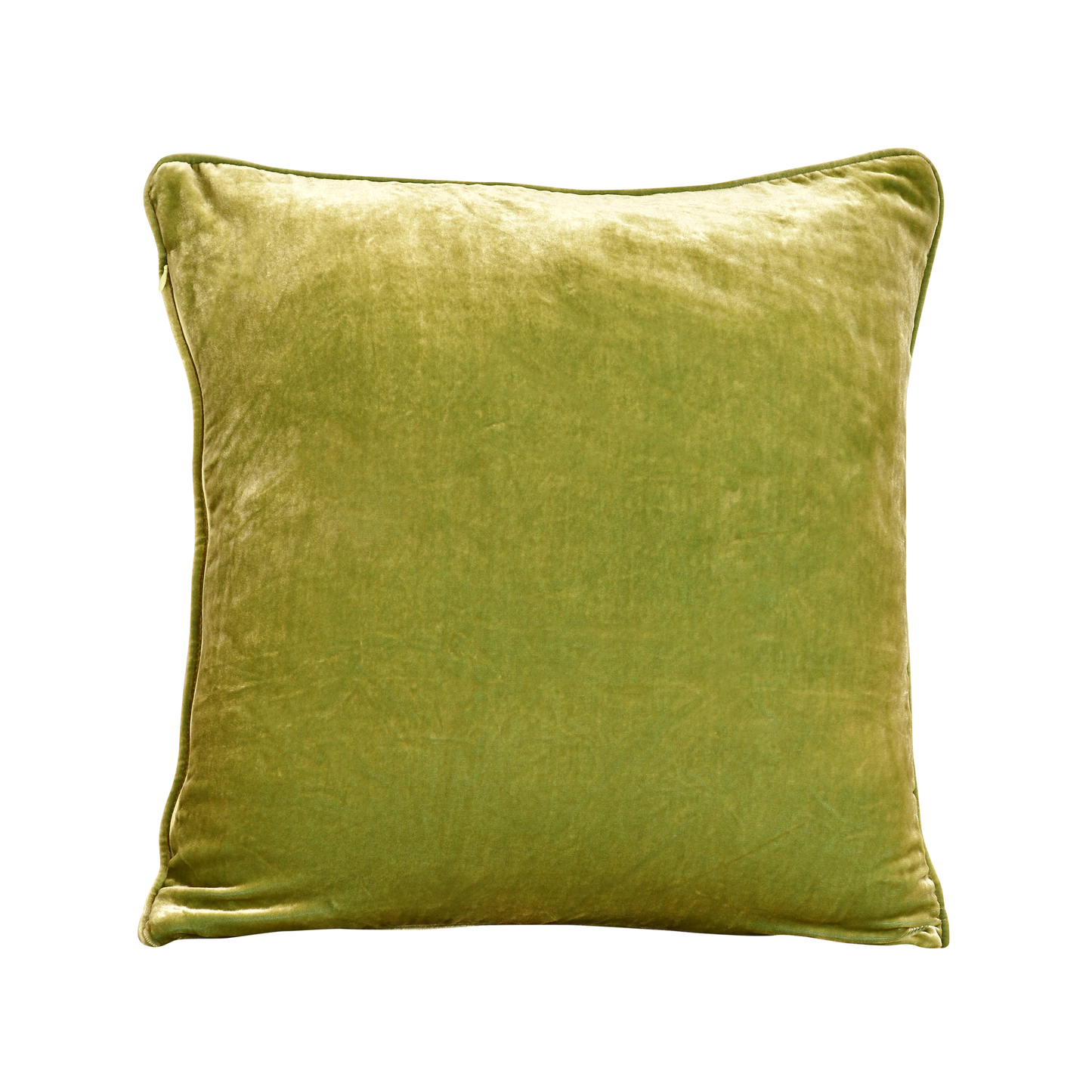
The back is crafted from luxurious French silk velvet, renowned for its softness, elegant sheen, and enduring quality, adding a touch of European refinement to the piece. This unique cushion beautifully unites Indonesian craftsmanship and culture with the timeless sophistication of velvet textiles, making it a striking accent for any interior.
Each cushion is made to order, allowing time for careful craftsmanship and attention to detail. Your beautiful piece will be ready within 15 working days from the date of order. It is an excellent present for you and your loved ones. We invite you to place your order now.
----
Dimensions: 45 cm x 45 cm. Materials used for the front of the cushion: Hand-drawn Batik fabric made from 100 % cotton. Materials used for the back of the cushion: French silk velvet. All of our cushions are assembled in Paris, France. Specialised dry clean only. Kindly note the insert is not included. SKU: CBF001
----
Situated on the northern coast of Java, the historic port city of Cirebon embodies a sophisticated synthesis of Javanese, Chinese, Islamic, and European cultural currents. This cosmopolitan heritage is brilliantly crystallised in its coastal batik (Batik Pesisiran), most iconic for the Mega Mendung (cloud formation) motif originating from the royal courts of Kasepuhan and Kanoman. Characterised by layered, undulating cloud structures meticulously outlined, this style uses gradual colour gradations to symbolise patience, spiritual depth, and the fluid nature of existence. The royal workshops developed a unique wax-resist method utilising specialised canting tools to execute sharp lines and deep colour dynamics, particularly in rich royal blues, deep reds, and ivory.
Beyond the courtly patterns, Cirebon's textile heritage includes intricate hand-drawn compositions that depict local maritime life, mystical gardens, and sacred animals. These cloths historically signified diplomatic exchanges, royal alliances, and high courtly status, functioning as vital components of interior hangings and ceremonial vestments. The interplay of foreign influences, such as Chinese cloud scroll aesthetics adapted to Islamic spiritual philosophies, underscores Cirebon’s role as a global crossroads. This architectural precision and fluid line work make Cirebon textiles an exceptional medium for luxury decorative arts, transforming contemporary cushions into objects of worldly elegance and historical resonance.
The folklore of Cirebon preserves the romance of Sunan Gunung Jati, the revered spiritual and political ruler of the Cirebon Sultanate, and Princess Ong Tien, the daughter of an emperor from the Ming Dynasty. Their story begins when Sunan Gunung Jati travelled to China, where his spiritual wisdom and charismatic presence captured the attention of the imperial court. Princess Ong Tien fell deeply in love with the Javanese saint, moved by his profound grace and the universal truths he taught. Recognising an undeniable kinship of souls, she sought her family's permission to journey across the seas to Java, willing to leave her opulent homeland for love.
Her imperial family, initially reluctant to let a princess wed a distant foreign sovereign, eventually relented under the weight of her absolute devotion, sending her with a massive flotilla laden with precious Ming porcelain, silks, and ritual treasures. Upon her arrival in Cirebon, their union was celebrated as a sacred bond that brought peace and cultural flourishing to the coastal realm. Princess Ong Tien integrated into the court, her presence permanently reshaping Cirebon's decorative arts, weaving Chinese artistic traditions into the very fabric of Javanese royal life and illustrating how love can unite vast empires.
---
France’s textile legacy is inseparable from the rise of Lyon as Europe’s silk capital, a status cemented in the 15th century when Louis XI established a royal manufactory to rival Italian imports. By the 17th century, under Louis XIV, French workshops were producing silks, velvets, and brocades of such refinement that they became symbols of courtly power and national prestige. The patterns—floral motifs, baroque scrolls, and later the iconic Toile de Jouy scenes—were designed to adorn palaces, churches, and the homes of the aristocracy, embedding textile artistry into the very identity of French luxury.
The craftsmanship behind these fabrics relied on highly specialized guilds and family-run ateliers where techniques were passed down through generations. In Lyon, master weavers operated complex drawlooms to create intricate figured silks, while in Alençon and Arras, lacemakers produced delicate needle and bobbin lace prized across Europe. Even today, a handful of heritage mills—such as those supplying Hermès ties or restoring textiles at Versailles—continue to use historic looms and finishing methods, preserving a tactile link to centuries of French savoir-faire.
On a luxury cushion, French textile heritage translates into fabrics that balance opulence with restraint: rich damasks, subtly shimmering silks, and printed linens that echo the elegance of 18th-century interiors. Each weave carries the imprint of a tradition in which textile design was treated as high art, commissioned by kings and refined by artisans whose names may be lost, but whose standards endure in every thread.
Share