Alexander Mandagie Paris
Stunning Batak Heritage Cushion
Stunning Batak Heritage Cushion
Couldn't load pickup availability
This majestic cushion is crafted from a treasured family heirloom, featuring traditional Indonesian Batak handwoven fabric, lovingly preserved and reimagined. Over two or three months, the craftsperson spent 200 hours hand-weaving a single piece of traditional cloth.
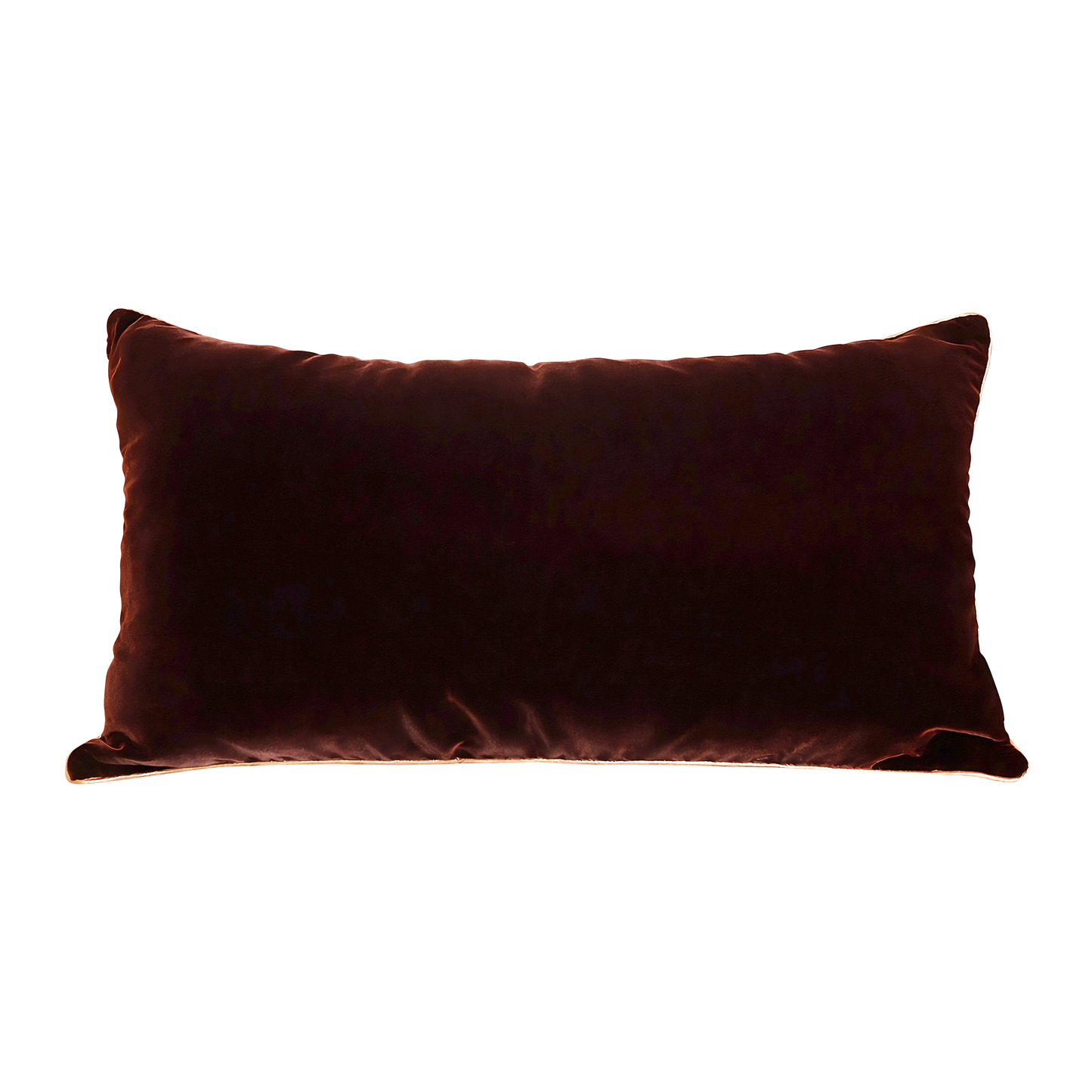
The back is finished with sumptuous French silk velour from Lyon, adding a soft, elegant touch. Together, these materials tell a story of heritage, craftsmanship, and quiet luxury.
Each cushion is made to order, allowing time for thoughtful craftsmanship and attention to every detail. Your piece will be ready for shipping within 15 working days. It makes a heartfelt birthday gift for you or your loved ones. We invite you to place your order now.
---
Dimensions: 90 cm x 45 cm. Materials used for the front of the cushion: Antique handwoven cotton. Materials used for the back of the cushion: French silk velour. All of our cushions are assembled in Paris, France. Specialised dry clean only. Kindly note the insert is not included.SKU: BTHEV001
---
The Batak People
The Batak peoples of North Sumatra—comprising the Toba, Karo, Simalungun, Pakpak, Angkola, and Mandailing sub-groups—have produced one of the archipelago's most powerful and spiritually charged textile traditions: the ulos. Woven on a backstrap loom using cotton threads that were historically spun by hand, the ulos is far more than cloth: it is a living symbol of warmth, blessing, and social obligation. Within the Batak cosmological framework of dalihan na tolu—a tripartite system of kinship relations governing all social exchange—specific types of ulos are prescribed for distinct ceremonial occasions, from birth and marriage to death and the honouring of ancestors.
Each variety of ulos carries its own name, design grammar, and sacred weight. The ulos ragidup—literally "the pattern of life"—is among the most revered, distinguished by its intricate supplementary weft designs and its association with the highest ceremonies of Toba Batak life. The characteristic palette of deep burgundy, brown, black, and natural white, punctuated by gold supplementary threads, achieves an austere magnificence unmatched in Indonesian textile culture. It is this depth of symbolic content, this refusal to separate beauty from meaning, that speaks most profoundly to the soul of our textile heritage—cloth that does not merely decorate a space, but consecrates it.
French tradition
France’s textile heritage is defined by a cluster of high-skill crafts rather than a single national style, with Lyon’s silk industry, Aubusson and Gobelins tapestries, and refined embroidery and lace traditions forming the core. Royal policy under Louis XIV and Colbert encouraged luxury manufacture, and Lyon’s silk workshops became central to European fashion and interior furnishing, developing increasingly complex figured weaves and, later, the Jacquard loom. These developments are documented in scholarly surveys such as 5000 Years of Textiles (1993) and in historical studies of French luxury manufacture that highlight Lyon, Aubusson, and Gobelins as emblematic sites of courtly and industrial textile excellence.
In luxury interiors, French fabrics carry prestige. A cushion made from French textiles is therefore not merely decorative; it is a small, tactile expression of a culture that has long treated cloth as a medium of art, architecture, and social ritual, embedding history and skill into everyday use.
Share