Taxes included.
This stunning 45 cm x 45 cm cushion showcases the artistry of Pekalongan Batik from Central Java, Indonesia, featuring authentic hand-drawn batik fabric with geometric patterns and colours that reflect the area's landscape on the front. Crafted using traditional wax-resist techniques, the intricate patterns celebrate Pekalongan’s rich heritage and its centuries-old reputation for bold, expressive batik designs.The creation of this batik involved more than 100 hours of work by the artisan over two months.
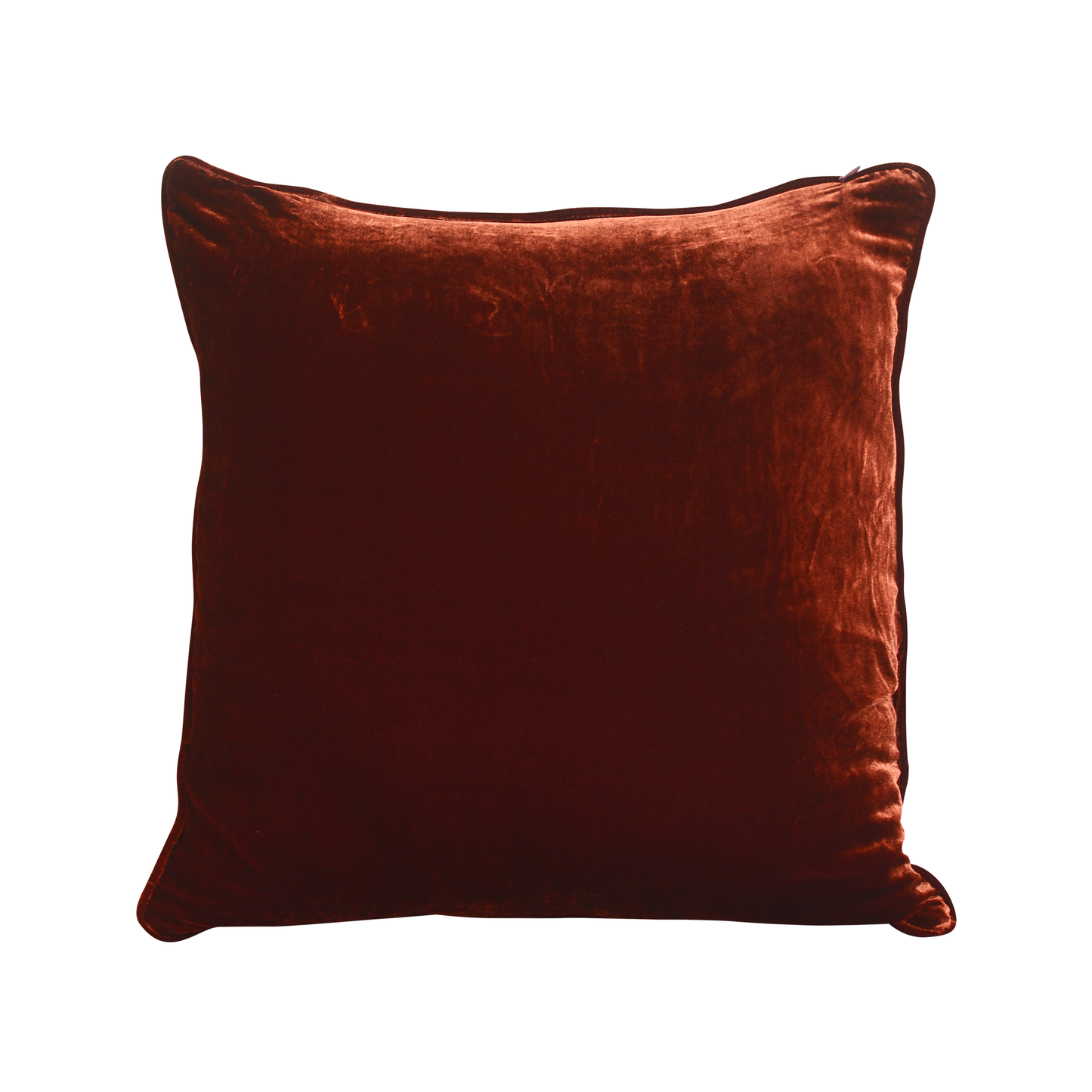
The back is finished with luxurious French silk velvet, offering a sumptuous contrast of texture and sheen. This cushion is a sophisticated fusion of Indonesian craftsmanship and French elegance, perfect for adding a striking accent to any interior.
Each cushion is made to order, allowing time for careful craftsmanship and attention to detail. Your beautiful piece will be ready within 15 working days from the date of order. It is an excellent present for you and your loved ones. We invite you to place your order now.
Dimensions: 45 cm x 45cm. Materials used for the front of the cushion: Hand-drawn cotton made by artisans. Materials used for the back of the cushion: French silk velvet. All of our cushions are assembled in Paris, France. Specialised dry clean only. Kindly note the insert is not included. SKU: PFV1
---
Dewi Lanjar, guardian of Pekalongan's coast
Among the folk legends of Pekalongan, the best known is that of Dewi Lanjar, said to rule the northern sea of Java. In the story, she begins as a beautiful princess named Dewi Rara Kuning, widowed very young when her husband died not long after their wedding. The Javanese word lanjar describes a young woman widowed before she has borne children, and it became her epithet. Grief drove her to leave her hometown, and upon reaching the Opak River, she encountered the Mataram ruler, Panembahan Senopati, and his chief minister, Singaranu, in the midst of ascetic meditation; she told them she would never marry again.
She then took up a long, unwavering period of asceticism of her own, at the end of which she vanished and came face to face with Kanjeng Ratu Kidul — Nyi Roro Kidul, queen of the southern sea — and asked to enter her service.
Her first assignment was the turning point. Together with a company of spirits, she was sent to obstruct Raden Bahu, who was clearing the Gambiren forest; his own power, earned through the ngalong asceticism, defeated every attempt. Rather than return south in failure, she asked Raden Bahu for permission to settle in Pekalongan — which he granted, as did Ratu Kidul — and she was allowed to dwell along the north coast of Central Java. Her palace is said to stand on the Pekalongan shore beside the Slamaran river. One account, citing Indonesia's intangible heritage registry, puts her domain from the Cirebon coast as far as Rembang, though other tellings extend it along the entire north coast.
----
Under Louis XIV and Colbert, French textile manufacture was deliberately centralized and upgraded to reduce dependence on imports and to project royal power through material culture. In 1662 Colbert purchased the Gobelin dye works and adjacent workshops in Paris and reorganized them as the Manufacture royale des Gobelins, a crown‑backed complex that brought together tapestry weavers, upholsterers, metalworkers, and designers under a single roof to furnish the king’s residences. Parallel measures targeted Lyon’s silk industry: quality statutes, inspection regimes, and subsidies helped triple output between 1665 and 1690, while tariffs and import restrictions discouraged foreign silks and lace in favour of domestic production.
After the 17th century, French textile production did not collapse but evolved under changing political and economic conditions. The Gobelins and Beauvais tapestry workshops continued to flourish through the 18th century, producing both grand figurative sets for the crown and more intimate decorative hangings and upholstery fabrics for aristocratic and bourgeois clients, often using designs by artists such as François Boucher and Jean‑Baptiste Oudry. Aubusson, granted a royal mark in 1665, expanded its output in the 18th century, freely reinterpreting Gobelins models and developing its own bright, decorative palette to serve a wider market. Lyon’s silk industry, the Grande Fabrique, remained a major European centre in the 18th century, though it experienced cycles of boom and downturn linked to war, trade shifts, and the Revolution, which caused a sharp decline before Napoleonic attempts at revival.