Alexander Mandagie Paris
Earthy Banyumas Batik with French Silk Velvet
Earthy Banyumas Batik with French Silk Velvet
Couldn't load pickup availability
This exquisite 45 cm x 45 cm cushion showcases the artistry of artisans from Banyumas in Central Java, Indonesia, featuring authentic hand-drawn batik fabric. Crafted using traditional wax-resist techniques, the intricate patterns celebrate Banyumas' rich heritage and its centuries-old reputation for bold, expressive batik designs. The artisan invested 100 hours of labour in creating this batik over two months.
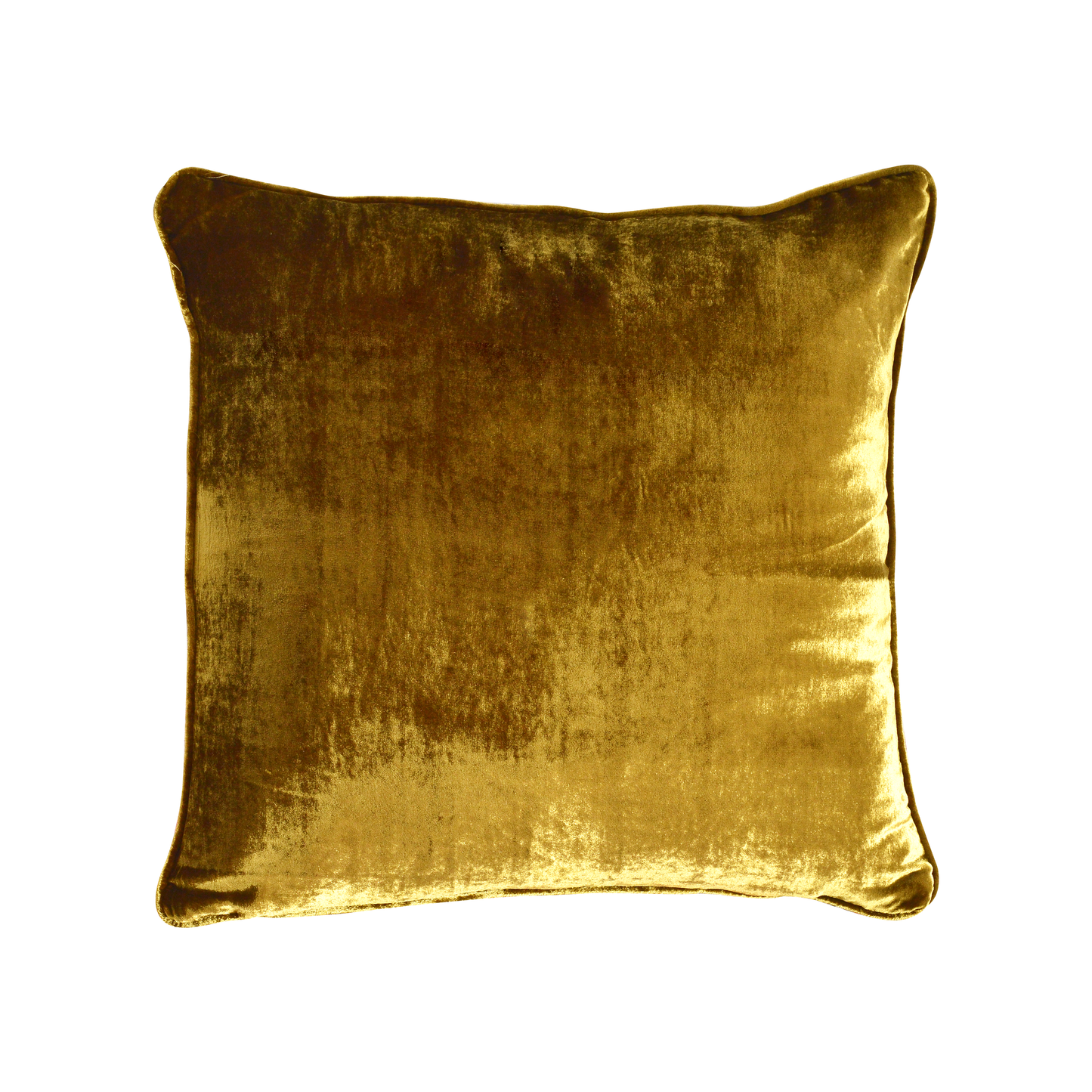
The back is finished with luxurious French silk velvet, offering a sumptuous contrast of texture and sheen. This cushion is a sophisticated fusion of Indonesian craftsmanship and European elegance, perfect for adding a striking accent to any interior.
Each cushion is made to order, allowing time for careful craftsmanship and attention to detail. Your piece will be ready for shipping within 15 working days of the order date. It is an excellent birthday present for you and your loved ones. Please place your order now.
---
Dimensions: 45 cm x 45 cm. Materials used for the front of the cushion: Hand-drawn cotton batik.Materials used for the back of the cushion: French silk velvet. All of our cushions are assembled in Paris, France. Specialised dry clean only. Kindly note the insert is not included. SKU: BYF001
-----
In the valley of the Serayu River, in the southwest of Central Java, lies Banyumas — a region that has long held itself a little apart from the refined court cities of Yogyakarta and Surakarta. Its character is famously down-to-earth: plain-spoken, egalitarian, and rooted in rural life rather than palace ceremony. Banyumas batik carries this spirit directly into cloth. Where the courts favoured restrained, codified patterns, Banyumas artisans worked in a bolder, freer hand, with deep sogan browns and dark indigos drawn from natural dyes and a robust repertoire of plant and everyday motifs. The region is also known for a meticulous double-sided dyeing tradition, in which both faces of the cloth are brought to the same depth of colour — a quiet point of pride among its makers.
Because it grew from village life rather than royal decree, Banyumas batik reads as an honest, unhurried art: the slow tracing of hot wax with the canting pen, the patient layering of earth-toned baths, the willingness to let a motif feel handmade rather than perfect. It is batik, understood as something to be lived in and worn daily, not only displayed. That same warmth — the depth of natural dye, the evidence of a human hand — is what we carry into a cushion made not for a vitrine, but for the rooms where life is actually spent.
Among the best-loved stories of the Banyumas highlands is the legend of Baturraden, whose name now belongs to a hillside retreat on the green slopes of Mount Slamet. In its common telling, a humble stable hand — a batur, or servant — fell in love with the daughter of the local lord, a raden of noble blood. Their bond crossed a line the social order of the time forbade, and when it was discovered, the young man was cast out and imprisoned.
The lady would not surrender her heart. She freed her beloved, and together they fled into the forested mountainside, choosing a life of obscurity together over rank and comfort apart. The name Baturraden — joining the words for "servant" and "noble" — is remembered as the trace of their union: a story passed down in the region as a gentle argument that devotion can outweigh the accident of birth, and that a family may be founded on choice rather than station.
---
French Textile Heritage
France's textile story runs through Lyon, the city that became Europe's silk capital. Louis XI tried to plant silk manufacture there in 1466, but local resistance pushed the project to Tours; it was François I who made it hold, granting letters patent in 1536 that installed the Piedmontese merchants Étienne Turquet and Barthélemy Naris in the city, followed in 1540 by a monopoly on raw silk imports. By the reign of Louis XIV, Lyon's workshops were producing silks, velvets and brocades of such refinement that they became instruments of courtly display and national prestige. Their visual vocabulary — floral motifs, baroque scrollwork, and later the narrative scenes of Toile de Jouy, printed at Jouy-en-Josas from 1760 — dressed palaces, churches and aristocratic houses, binding textile design into the identity of French luxury.
The skill behind these fabrics lived in trade corporations and family ateliers, where technique passed from one generation to the next. In Lyon, master weavers worked the drawloom, an intricate apparatus that required a second pair of hands to lift the pattern threads, to produce figured silks long before Jacquard mechanised the process in 1804. In Normandy, Alençon built its reputation on needle lace after Colbert established a royal lace workshop there in 1665; in Artois, Arras became known from the seventeenth century for a fine white bobbin lace. A few houses still carry that thread: Tassinari & Chatel (founded 1680) and Prelle (founded 1752) reweave historic patterns from their own archives for Versailles and other palaces, drawing on period records and hand looms alongside modern equipment, while Hermès has its tie silks woven and finished in the Lyon region.
On a luxury cushion, this inheritance shows up as fabric that balances opulence with restraint: dense damasks, softly lustrous silks, printed linens that recall the poise of eighteenth-century interiors. Each weave carries a tradition in which textile design was treated as a major art — commissioned by kings, refined by artisans whose names are sometimes recorded and often not, but whose standards still govern the thread.
Share